AMD said on September 28, 2026 that it had agreed to acquire World Labs, the San Francisco AI lab co-founded by Fei-Fei Li, in an all-stock transaction valued at about $8.2 billion. The deal is expected to close by the end of 2026, subject to regulatory approvals and customary closing conditions.
Li, World Labs' chief executive, will join AMD as executive vice president and chief scientist and report to AMD chief executive Lisa Su. After the deal closes, the World Labs team will continue its research on AI models, and co-founders Justin Johnson and Ben Mildenhall will keep leading it alongside Li, according to The Next Web.
Li announced the move in a post on her Substack, writing that it was clear the right path for herself and World Labs was to continue the lab's mission as part of AMD.
What World Labs built
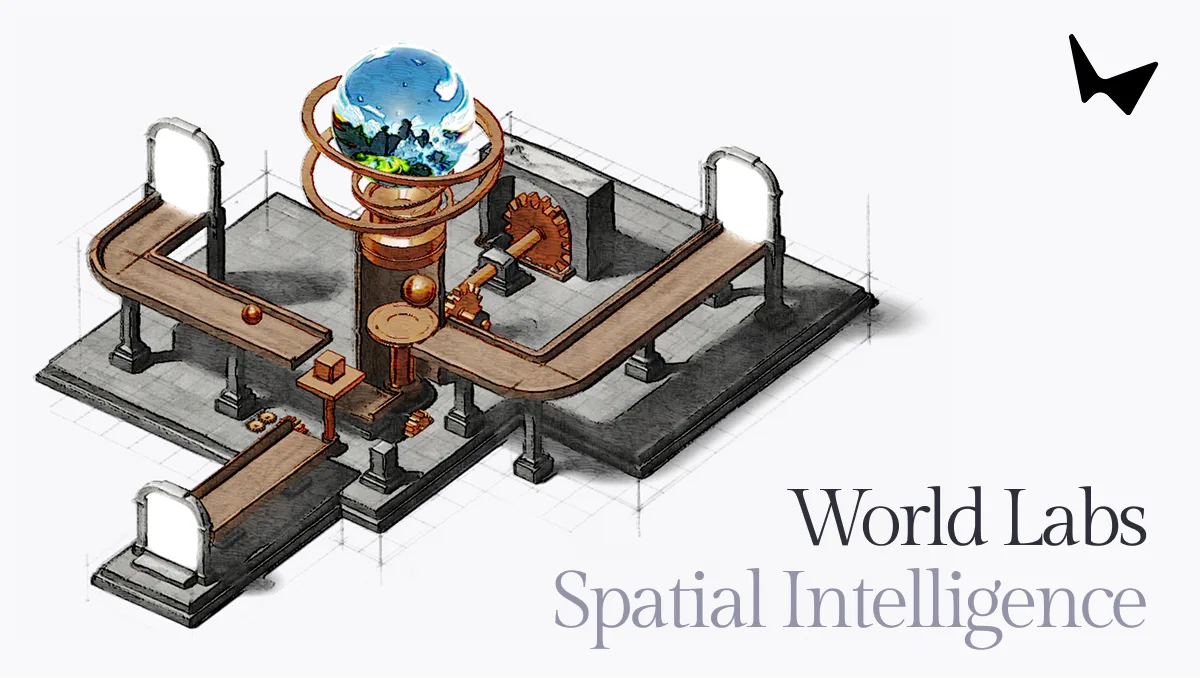
Li founded World Labs at the start of 2024 with Johnson and Mildenhall. The lab builds what it calls spatial-intelligence models, which generate, reconstruct and simulate interactive 3D environments from text, images and video, and it also works on robot learning and simulation, AMD said. Its product Marble creates 3D worlds from images, video or text, The Next Web reported.
In her post Li described Atlas, a newer model that predicts new camera views of a scene from a set of 2D images, much as a language model predicts the next word. She wrote that it had drawn interest for robot training environments, scene generation for therapy and entertainment, and reconstruction of real spaces for property, design and construction. World Labs also acquired SceniX to build out robotics simulation.
Li is best known for ImageNet, the image dataset her lab produced, and was the founding director of Stanford's Human-Centered AI institute. In her post she argued that language alone is not enough for AI: "The universe isn't made up of words; it's made of real things."
“Building the compute platforms for the next generation of AI requires a deep understanding of how models are evolving. Fei-Fei and the World Labs team bring exceptional research leadership and model expertise. Together, we can use that insight to develop the hardware, software, and systems that will power the next generation of AI and strengthen the open AI ecosystem.”
Why AMD is buying
AMD presented the deal as a way to understand where AI workloads are heading. As AI moves into reasoning, robotics, simulation and physical AI, the demands on computing change, and the company said World Labs' expertise would help shape its future hardware, software and systems roadmaps. Matt Kimball, an analyst at Moor Insights & Strategy, told Data Center Knowledge the purchase was largely about intellectual property, talent and insight into future chip requirements.
The two companies were already close. Li wrote that Su was an early investor in World Labs and that the companies began a deep technical partnership in 2025, starting with model training and inference optimisation on AMD GPUs. She wrote that without a focused hardware effort, AI is limited in efficiency and scale.
The deal adds to a run of AI moves by AMD. In August it bought Taalas, a startup that builds AI models directly into silicon, and in July it said it would invest $5 billion in Anthropic, The Next Web reported.
The price and the funding
AMD is paying entirely in its own shares. The Next Web, SDxCentral and Data Center Knowledge all put the value at about $8.2 billion. AMD did not disclose World Labs' headcount.
World Labs raised $1 billion in February 2026. That funding announcement named AMD and Nvidia among its investors, along with Autodesk, Emerson Collective, Fidelity and Sea, according to The Next Web. The acquisition means AMD will own a lab that its main GPU rival also backed.
A crowded race for world models
World Labs is one of several companies building world models, AI systems that learn how the physical world behaves rather than only how language works. Kimball described the distinction as a focus on geometry, physics, objects and motion instead of tokens.
Li wrote that the team is committed to providing open models and platforms that run AI end to end, from hardware and software to models and data. She did not say how existing World Labs products such as Marble will change once the lab is part of AMD.