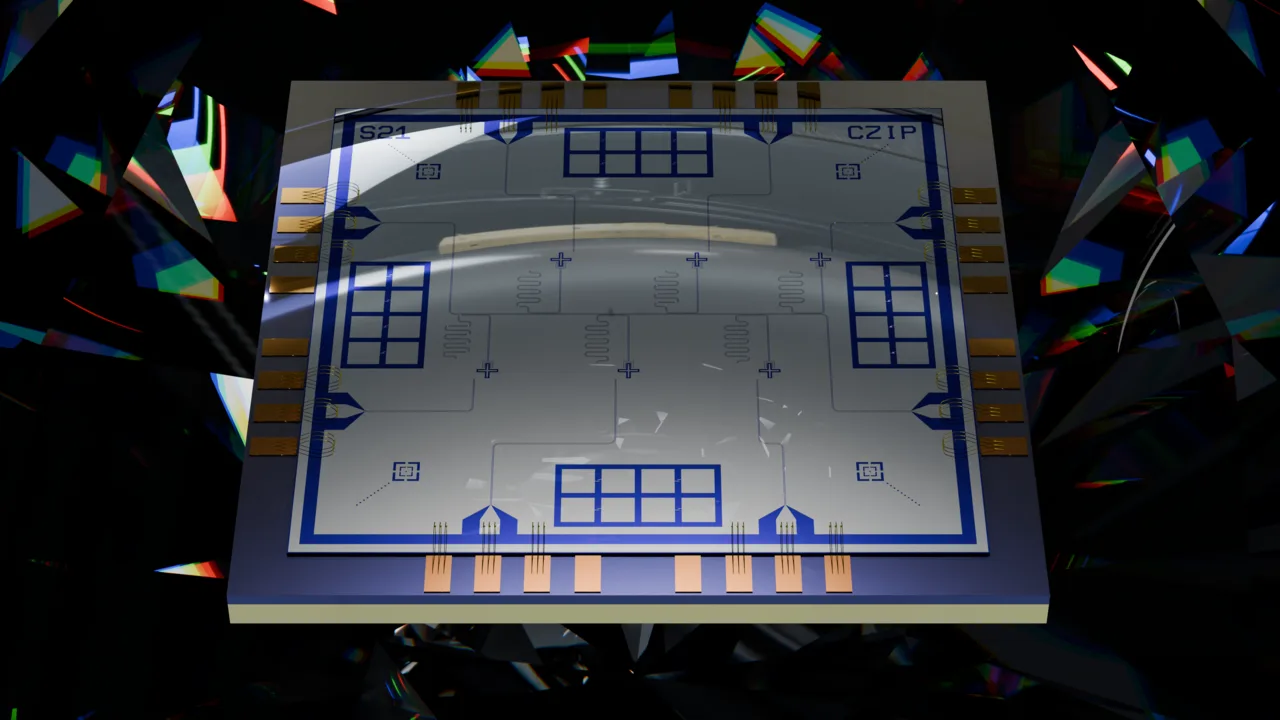
D-Wave Quantum, the NYSE-listed quantum computing company, agreed on 7 January 2026 to acquire Quantum Circuits Inc., a New Haven, Connecticut startup that builds error-corrected superconducting gate-model quantum computers, for $550 million.
D-Wave will pay $300 million in its own common stock, about 55% of the price, and $250 million in cash. Closing was expected in late January 2026, subject to the expiry or termination of the Hart-Scott-Rodino antitrust waiting period and approval by the New York Stock Exchange to list the new D-Wave shares. The Quantum Insider reported on 20 January 2026 that D-Wave had completed the acquisition.
Quantum Circuits' specialists in superconducting computing and device physics will join D-Wave through a new research and development centre in New Haven, led by the Quantum Circuits team, the companies said.
What Quantum Circuits built
Quantum Circuits is a spin-out from Yale University. Its co-founder and chief scientist, Rob Schoelkopf, is Sterling Professor of Applied Physics at Yale and is credited in D-Wave's announcement as the inventor of the transmon qubit and the dual-rail qubit. Ray Smets is the company's chief executive.
The company's systems use dual-rail qubits, which have error detection built into the qubit itself. The companies say this produces higher-quality qubits and reduces the number of physical qubits needed to build each logical, error-corrected qubit, one of the main obstacles to scaling quantum computers. Schoelkopf has summarised the approach as correcting errors first and scaling second.
In November 2024 Quantum Circuits announced Aqumen Seeker, an eight-qubit processor based on dual-rail qubits with built-in error detection, according to HPCwire.
“Our 'correct-first' philosophy is the most viable path to scaling quantum for the enterprise”
Why D-Wave is buying
D-Wave has built its business on quantum annealing, a type of quantum computer suited to optimisation problems, and says it has more than 100 customer organisations and more than 200 million problems submitted to its systems. It describes itself as the only company building both annealing and gate-model systems. Quantum Circuits gives it a gate-model architecture with error detection already built in.
D-Wave said it would combine Quantum Circuits' qubit technology with its own experience in scalable control of superconducting processors and its cloud platform. The first product of the combined roadmap is an initial dual-rail system planned for general availability in 2026, and the companies said they would bring gate-model products and services to market that year. D-Wave planned to present the full roadmap at its Qubits 2026 conference in Boca Raton, Florida, on 27-28 January.
"Fault-tolerant error-corrected quantum computing is within our reach," Schoelkopf said in the announcement. After the deal closed, he became D-Wave's chief scientist, The Quantum Insider reported.
The funding
Quantum Circuits closed a final Series B round of more than $60 million in August 2024. ARCH Venture Partners, F-Prime Capital, Sequoia Capital and Hither Creek Ventures led the round, with Canaan Partners, Fitz Gate Ventures, In-Q-Tel, Osage University Partners, Connecticut Innovations, Tao Capital Partners and Tribeca Venture Partners also investing, The Quantum Insider reported. The company said at the time that it would use the money to engage lead customers and commercialise its systems.
Neither company disclosed Quantum Circuits' total funding or headcount. Centerview Partners was D-Wave's exclusive financial adviser, and Paul, Weiss, Rifkind, Wharton & Garrison was its legal counsel.
Paying with stock
D-Wave chose to fund more than half of the price with newly issued shares, which is why the deal needed NYSE approval to list them. The company said it would file a Form 8-K with the US Securities and Exchange Commission summarising the terms and attaching the merger agreement.
In the announcement, D-Wave chief executive Alan Baratz said the deal established D-Wave as the most advanced and established leader in superconducting quantum computing. Smets said Quantum Circuits' "correct-first" philosophy was the most viable way to scale quantum computing for businesses, and Schoelkopf said no other company had a more powerful qubit with built-in error detection.