Mistral AI acquired Pimento, a Paris startup whose software uses generative AI to produce advertising visuals, in a deal that became public on September 21 and 22, 2026. It is the French AI company's third acquisition of the year.
Pimento co-founder and chief executive Florent Facq confirmed the sale on LinkedIn, Maddyness reported. He wrote that the team would join Mistral's engineering and product teams to improve the user experience of Vibe, the conversational assistant previously called Le Chat. According to The Next Web, Mistral confirmed the deal to AFP and said it cost "several million euros".
The price has been reported two ways. L'Informé, which first reported the deal, put it at about €3.8 million (about $4.4 million). Sifted later reported that the deal was worth €12.7 million (about $14.9 million) in cash and shares, based on documents it had reviewed. Mistral has not confirmed either figure.
What Pimento built
Facq and Tomás Yany, a former Apple AI researcher who also worked at Nabla, founded Pimento in October 2022. It started as a moodboarding tool for creative teams and later moved into ad production, The Next Web reported.
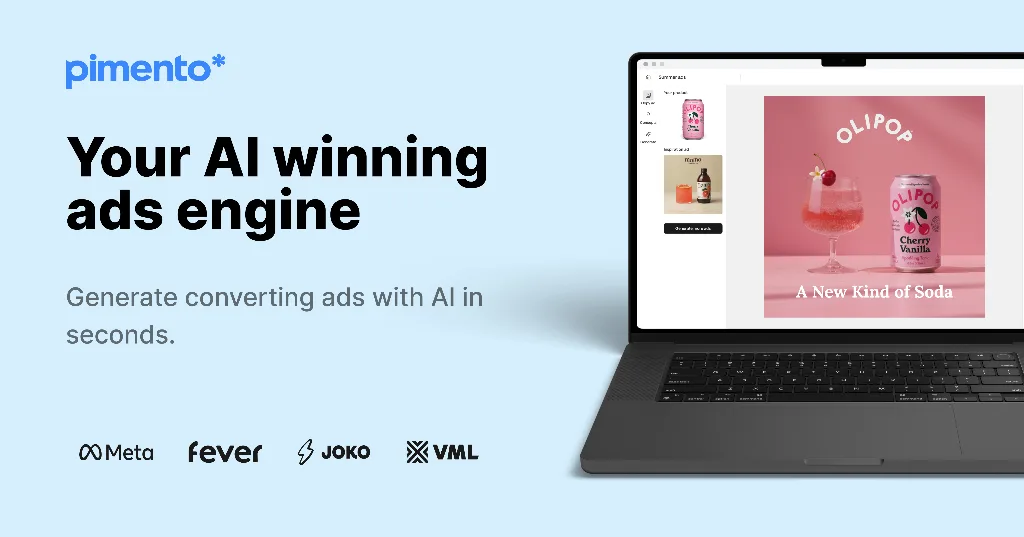
The current product turns briefs, brand identities and campaign data into ad visuals and short animations for social media. Maddyness said it was used by marketing and creative teams in e-commerce, cosmetics and food. Pimento's website says it works with more than 180 brands.
Neither company has said what will happen to Pimento's ad tool or to the brands that pay for it. A person familiar with the deal told L'Informé that Mistral was more interested in the skills of Pimento's developers than in its customer base.
“Nous rejoindrons les équipes ingénierie et produits pour améliorer l’expérience utilisateur de Vibe (ex-Le Chat), l’agent conversationnel de Mistral”
The founders and the funding
In December 2023 Pimento raised €3 million (about $3.5 million) in seed funding led by Partech and Cygni Capital. Angel investors included Hugging Face co-founder Julien Chaumond and Dust co-founder Stanislas Polu, and Maddyness reported that Thibaud Elzière, co-founder of startup studio Hexa, also invested.
Pimento's headcount was not disclosed, and there is no record of a later funding round before the sale.
Why Mistral is buying
The deal came about two weeks after Mistral closed a €3 billion (about $3.5 billion) funding round led by Samsung Electronics, with ASML and Nvidia also taking part. The Next Web reported that the round valued Mistral at more than €21 billion after the money.
Mistral has used part of its capital to buy small teams. In February it bought Koyeb, a Paris serverless cloud provider, to strengthen its Mistral Compute business. In May it bought Emmi AI, an Austrian startup that builds physics simulation models for industrial engineering, whose team of more than 30 joined Mistral's science and applied AI groups.
Each deal has targeted a different part of the business. Pimento is aimed at Vibe, the consumer-facing assistant where Mistral competes directly with OpenAI's ChatGPT and Google's Gemini, and Pimento is the first of the three targets to have sold a product to marketers, according to The Next Web.
What happens to Pimento's customers
The deal leaves open what happens to the brands using Pimento today. L'Informé pointed out that the future of the advertising product had not been settled, and The Next Web noted that neither company had addressed it. For now, the team is moving to work on Vibe.
Pimento's product is aimed at marketers, while Vibe is a general assistant used by consumers and businesses. Mistral has not said whether Pimento's image and animation tools will be added to Vibe or whether the ad product will continue as a separate service.
A small deal next to a large round
Samsung led Mistral's €3 billion round alongside co-leads Scaleup Europe Fund, which is managed by EQT, and PSG Equity. Mistral called it the largest equity round ever raised by a European tech company.
Against that sum, even the higher reported price for Pimento is small. Maddyness wrote that Mistral, led by chief executive Arthur Mensch, was looking for skills and resources to strengthen its position with large corporate customers and in computing capacity, and that more acquisitions were likely to follow.