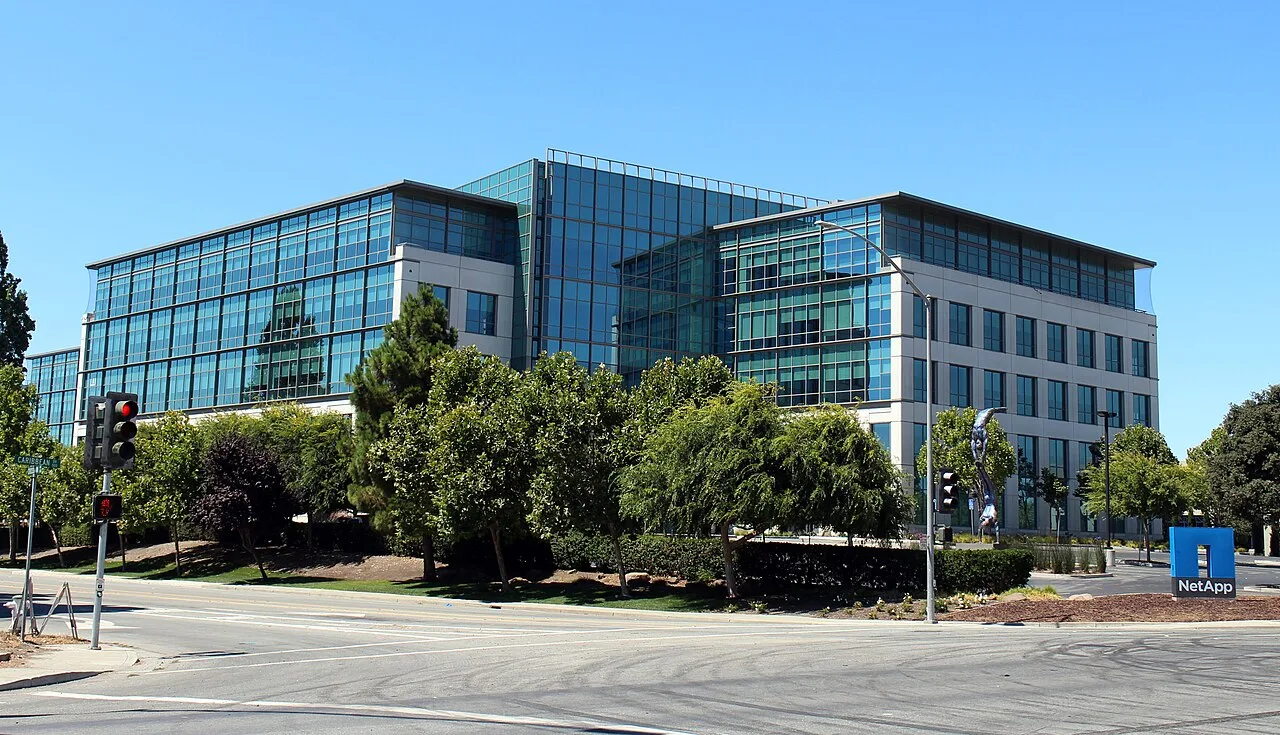
NetApp, the enterprise storage and data infrastructure company, announced in July 2026 that it was acquiring DataPelago, a California startup that builds a data processing engine designed to run on GPUs as well as CPUs. NetApp did not disclose the price or other financial terms.
DataPelago will operate as a wholly owned subsidiary of NetApp once the deal is complete, according to Techzine and ITPro. NetApp said the technology would let customers process data with GPU acceleration directly in the storage layer, instead of copying it into separate compute clusters first.
DataPelago was founded in 2021 and is led by founder and chief executive Rajan Goyal. The company came out of stealth in October 2024 with $47 million in funding.
What DataPelago built
DataPelago's main product is Nucleus, which the company calls a universal data processing engine. It accepts query plans from engines that companies already run, such as Apache Spark, Trino and Ray, breaks them into individual operators and sends each operator to whichever processor suits it best, whether a CPU or a GPU. Applications do not need to be rewritten to use it, Techzine reported.
The engine works on data in place. Instead of moving large data sets to a separate cluster for analytics or AI preparation, the computation is brought to where the data is stored.
DataPelago says this approach can cut infrastructure costs by up to 80% and run workloads up to ten times faster than conventional architectures that separate storage and compute. StorageReview noted that the gains depend on the workload and deployment, and the figures have not been independently verified.
“Joining NetApp gives us the opportunity to combine our breakthrough processing technology with the industry's best data infrastructure portfolio.”
Why NetApp is buying
NetApp's argument is that the hard part of enterprise AI is no longer the models or the chips but getting data ready: finding it, preparing it, governing it and making it usable. Moving that work into the storage layer is meant to remove a step that slows projects down and leaves expensive GPUs waiting for data.
The purchase builds on NetApp's AFX systems and its AI Data Engine, launched the year before, which uses Nvidia NIM microservices to vectorize data customers already store. Techzine reported that NetApp describes the goal as zero-copy activation, where analytics, generative AI and agentic workloads run on data where it sits without duplicate copies.
"NetApp manages more enterprise data across more environments than anyone in the industry," said Syam Nair, NetApp's chief product officer. He said the next phase of AI would be won by those who make that data work at the source. Chief executive George Kurian said the deal supported NetApp's aim of giving customers "full command" of their data.
The founder and the funding
Goyal previously served as chief technology officer of Fungible and has held roles at Cisco, Oracle and Cavium, according to a Pulse 2.0 interview. He has more than 20 years of experience in accelerated computing.
When DataPelago launched publicly in October 2024, it said it had raised $47 million from Eclipse, Taiwania Capital, Qualcomm Ventures, Alter Venture Partners, Nautilus Venture Partners and Silicon Valley Bank, a division of First Citizens Bank. Lior Susan of Eclipse and Cheng Wu of Taiwania Capital sat on its board. McAfee was named as a design partner and Akad Seguros as an early customer.
Goyal said joining NetApp would allow the company to bring its technology to a wider enterprise customer base. "Enterprises have invested billions in GPUs and AI models, but their data remains fragmented, leaving valuable computing resources to sit idle rather than putting these investments to work," he said.
What happens next
StorageReview reported that DataPelago's engineering team and the Nucleus engine are expected to support NetApp's strategy both on premises and in the cloud. The publication also said the acquisition continues NetApp's ecosystem partnerships with Cisco, Google Cloud, Red Hat and SK Telecom.
Neither company has said whether Nucleus will continue to be sold as a standalone product or only as part of NetApp's platform. NetApp did not give a timeline for integration or say how many DataPelago employees would join.