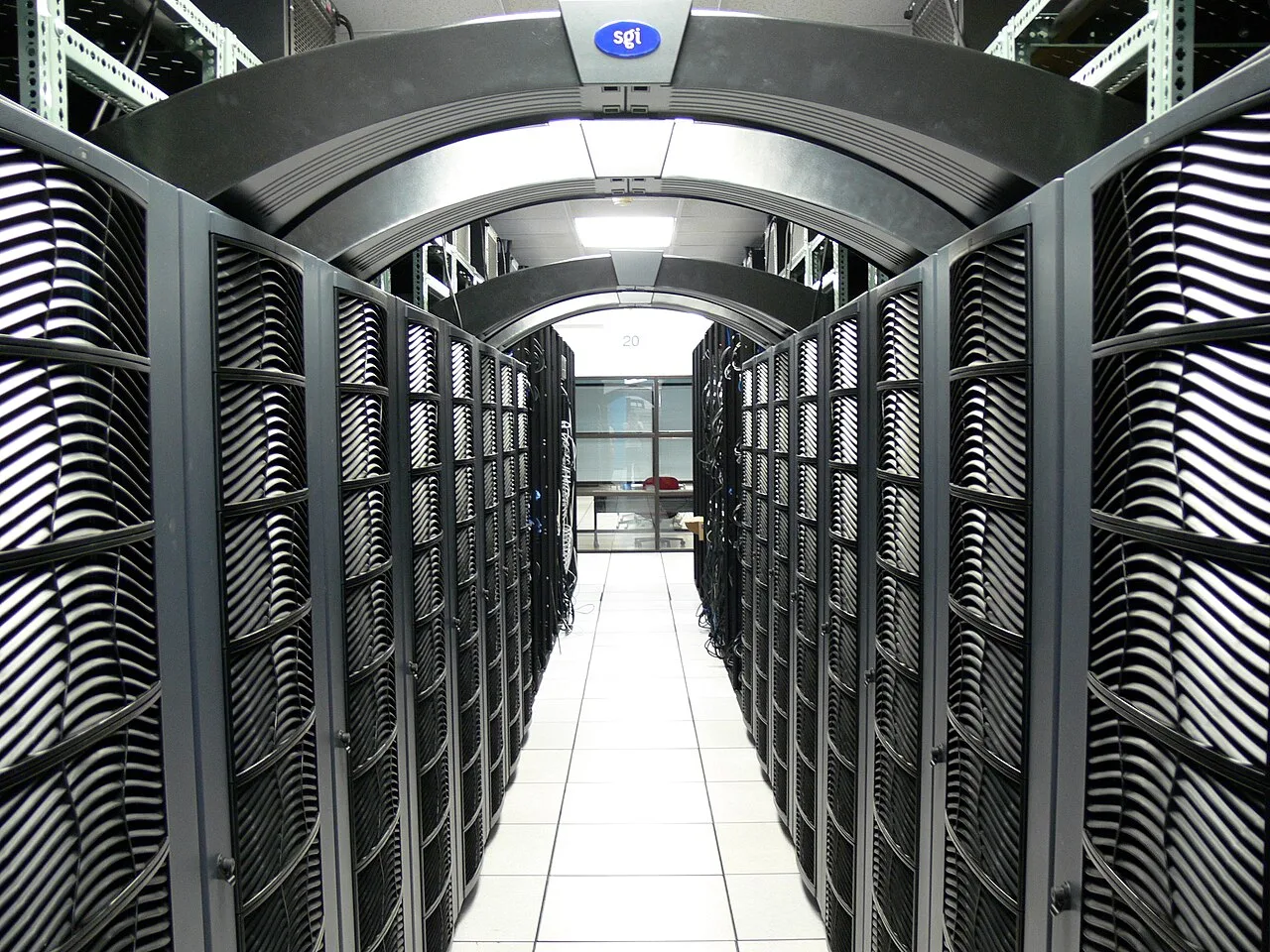
Zhipu, the Hong Kong-listed Chinese AI model developer also known as Z.ai, completed its acquisition of xCore Sigma (Zhongke Jiahe), a startup that builds compiler software for AI chips, on 21 July 2026. The news emerged alongside reports that Zhipu had built a 1-gigawatt data centre that runs only on Chinese-made AI chips.
Price, payment method and arrangements for the remaining shareholders and the team were not disclosed. According to business registry records cited by PEdaily, 15 shareholders exited, including a Sanya private equity fund and the Beijing AI Industry Investment Fund. Z.AI, an entity linked to Zhipu, became the largest shareholder with about 60%, while founder Cui Huimin's stake fell to 11%.
PEdaily described the deal as one of Zhipu's largest acquisitions in recent years and characterised it as a purchase of the startup's compiler team.
What xCore Sigma built
xCore Sigma was founded in 2023 and grew out of the compiler laboratory at the Institute of Computing Technology of the Chinese Academy of Sciences. Its founder, Cui Huimin, is a Tsinghua University computer science graduate and a researcher and doctoral supervisor at the institute, where she led the compiler team.
Compilers translate the operations of an AI model into code that runs efficiently on a particular chip. The software matters in China because domestic AI chips have weaker software ecosystems than Nvidia's CUDA, which limits how much of their raw performance developers can use. In July 2024 xCore Sigma launched SigInfer, an inference engine for mixed hardware, SigFT, a fine-tuning engine, and SigTrans, a tool for generating and translating operators. Its aim was a single software layer that works across different Chinese chips as well as the export-restricted Nvidia A800 and H800.
10jqka described the team as one of China's leading AI infrastructure groups, with work focused on the software stack for heterogeneous computing and on compilation optimisation. PEdaily argued that talent was the main barrier in this field, which helps explain why Zhipu chose to buy the team rather than build the capability itself.
Why Zhipu is buying
Zhipu has been shifting its business toward selling model access through cloud APIs, which means it carries the cost of the computing power that serves those requests. After the release of its GLM-5 model, users reported garbled text and repeated answers under heavy load. In an April technical blog post Zhipu attributed the problems to race-condition bugs in its inference system and thanked xCore Sigma and an Institute of Computing Technology laboratory for their help. Code contributions to the open-source SGLang project show the fix was developed jointly with xCore Sigma, PEdaily reported.
Chinese financial outlet 10jqka, citing people familiar with the matter, said the two announcements were meant to fill complementary gaps: the data centre supplies computing capacity, while xCore Sigma's compilers, runtime and inference engines are intended to raise utilisation of mixed domestic chips, lower inference costs and speed up model deployment.
The founders and the funding
xCore Sigma raised about RMB 130 million (about $18 million) across five early rounds, a figure PEdaily said it confirmed with the company. Baidu Ventures led a seed round of tens of millions of yuan in August 2023, with Morningside, Cambricon and others taking part. Yuanhe Origin led an angel round in March 2024, followed by an angel-plus round with Guozhong Capital, a Pre-A1 round led by the Beijing AI Industry Investment Fund and, in April 2025, a Pre-A+ round from Shenzhen High-Tech Investment.
Chip designer Cambricon disclosed that it held a 0.76% stake through a subsidiary, carried at RMB 2 million (about $280,000) as of 31 March 2025.
A 1GW bet on Chinese chips
Bloomberg, cited by PEdaily, reported that Zhipu's new data centre is designed at the 1-gigawatt scale and has partly started operating. Zhipu also runs several clusters of more than 10,000 chips each, mainly for training its GLM models.
Investors reacted strongly. Zhipu's Hong Kong shares had fallen sharply from a 22 June peak, but on 21 July they closed at HK$1,219, up 36.89%, according to the South China Morning Post.