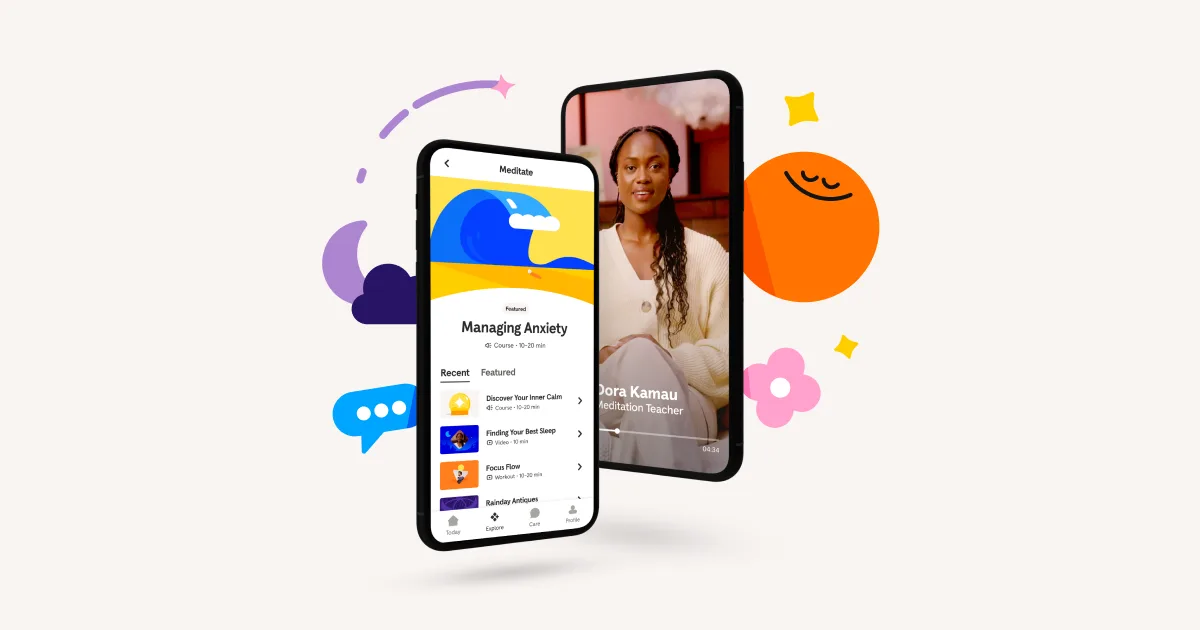
Sword Health, the AI health company that started out in digital physical therapy, signed a definitive agreement to acquire mental health and mindfulness provider Headspace in an all-cash deal valued at up to $300 million, the companies announced on September 16, 2026.
The transaction folds OrangeDot, Headspace's parent company, into Sword. It was expected to close at the beginning of the fourth quarter of 2026, subject to customary closing conditions. Headspace said the combined company would build on its existing services rather than replace them.
HIT Consultant described Sword as a $4 billion company. The price is far below the roughly $3 billion valuation Headspace reached in 2021, when it merged with teletherapy provider Ginger.
A deal that surfaced in a filing first
The acquisition became public before either company announced it. Healthcare Dealflow found a Massachusetts regulatory notice, filed in July, which said Sword would take over OrangeDot through a merger, pharmaphorum reported in August. The filing did not give a price, but Axios, citing several unnamed sources, reported that Sword would pay between $200 million and $300 million.
In that filing, Headspace said its services would continue without interruption after the deal closed. Pharmaphorum reported at the time that the deal was expected to close on September 14 and that neither company had confirmed it. Sword's formal announcement in mid-September instead set the price at up to $300 million, the top of the range Axios had reported, and moved the expected closing to early in the fourth quarter.
“This is one of the most consequential moves we've made in our history.”
What Headspace brings
Headspace reaches about 100 million lives in 200 countries and territories and serves around 20,000 enterprise clients, including employers, public sector bodies and sports partners such as the NBA, according to HIT Consultant. It has health plan integrations with Cigna Healthcare and Kaiser Permanente and a network of more than 15,000 clinical providers, coaches, licensed therapists and telepsychiatrists.
The company says its mindfulness, sleep and behavioural health programmes are backed by 84 peer-reviewed clinical studies. Its products include Ebb, an AI companion, which pharmaphorum said was likely to be folded into Sword's own mental health offerings.
Headspace raised about $320 million from investors, according to Crunchbase figures cited by pharmaphorum. Sword did not say how many Headspace employees would join it.
Why Sword is buying
Founded by chief executive Virgílio Bento as a digital musculoskeletal care platform, Sword has expanded into pelvic health, surgical preparation, cardiometabolic conditions and mental health. It says it has more than 2,500 enterprise clients, including national governments, the US military and Fortune 500 employers, and has treated more than one million people with its AI Care platform.
In March 2026 Sword expanded Mind, its employer-based AI mental health product, into a full employee assistance programme and launched Dawn, its first direct-to-consumer product. Headspace adds a widely known consumer brand and a large enterprise customer base to that push. HIT Consultant reported that Sword plans to sell its musculoskeletal, women's health and cardiometabolic programmes to Headspace customers, and to bundle Headspace's employee assistance, navigation and telepsychiatry tools into its own enterprise accounts.
Bento described the deal as one of the most significant moves in the company's history.
Consolidation in employer digital health
Headspace is Sword's second acquisition of 2026. In January it bought Kaia Health, a digital therapeutics company, for $285 million. HIT Consultant reported that Sword is positioning itself for an expected public listing.
HIT Consultant described the price as a major valuation reset for Headspace and placed the deal within a wider consolidation of digital health services sold to employers. The publication also pointed to the link between chronic musculoskeletal pain and depression or anxiety as part of the clinical case for combining physical and mental health care in one company.
Sword has also published two open-source frameworks, MindEval and MindGuard, for evaluating how large language models behave in therapeutic conversations, according to HIT Consultant. Headspace, on its own site, said Sword had built the clinical intelligence for continuous, personalised and proactive care, while Headspace would contribute its mental health expertise and brand.